
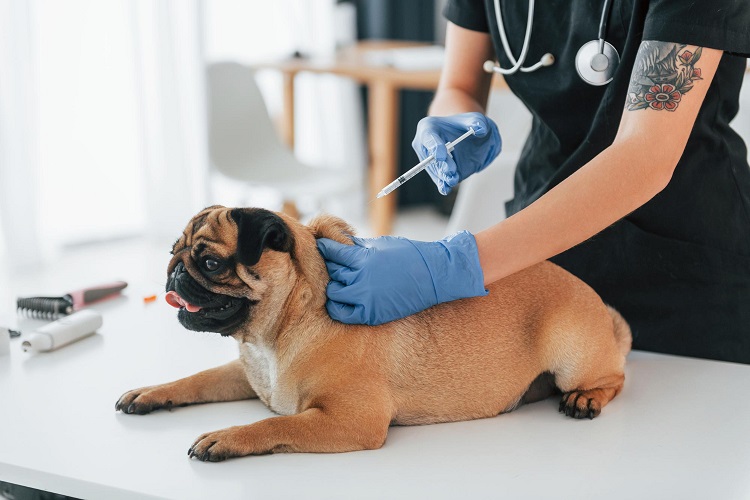
Vaccination is one of the most important parts of preventive pet care. Vaccination schedules depend more on the age your pet, lifestyle, location, previous vaccination history, and disease risk than on breed. A veterinarian should determine the final schedule for each pet.
Routine Vet Check-ups & Preventive Care
Vaccinations and parasite prevention are only key to keep your pet healthy. Regular veterinary check-ups can help spot some problems early, though your pet seems completely fine.
Keep a simple record of vaccinations, parasite treatments, medications and any health concerns. If you notice a new or persistent change in eating, drinking, energy, breathing, toileting or behaviour, it is good discussing it with your veterinarian.
Dog vaccination guide
| Age | Common vaccinations / preventive care |
| 6–8 weeks | First puppy combination vaccine, commonly covering distemper, adenovirus/hepatitis and parvovirus |
| 10–12 weeks | Second puppy combination dose |
| 14–16 weeks | Final puppy combination dose; rabies according to local regulations and veterinary advice |
| Around 1 year | Booster vaccinations as recommended |
| Adult dogs | Core boosters at intervals recommended by the veterinarian; some vaccines may be given annually and others at longer intervals |
| Lifestyle-dependent | Bordetella, leptospirosis and other vaccines may be recommended depending on exposure risk |
Cat vaccination guide
| Age | Common vaccinations / preventive care |
| 6–8 weeks | First kitten combination vaccine, commonly covering feline herpesvirus, calicivirus and panleukopenia |
| 10–12 weeks | Second combination dose |
| 14–16 weeks | Final kitten combination dose; rabies according to local regulations and veterinary advice |
| Around 1 year | Booster vaccinations as recommended |
| Adult cats | Core boosters according to veterinary assessment and vaccine type |
| Higher-risk cats | Feline leukemia virus (FeLV) vaccination may be recommended, particularly for kittens and cats with outdoor exposure |
Core vs. lifestyle vaccines
Dogs
● Core: Canine distemper, adenovirus and parvovirus; rabies where required/recommended.
● Risk-based: Leptospirosis, Bordetella and other vaccines depending on lifestyle and local disease prevalence.
Cats
● Core: Feline panleukopenia, feline herpesvirus and calicivirus; rabies where required/recommended.
● Risk-based: FeLV and other vaccines depending on lifestyle and exposure.
Indoor vs. outdoor pets
- An indoor-only cat may still need core vaccinations because infectious organisms can be brought into the home on clothing, shoes, other animals, or through veterinary visits.
- Dogs that regularly visit parks, boarding facilities, groomers, dog daycare, or shows may have greater exposure to certain infectious diseases and may need additional protection.
Important vaccination precautions
● Don’t vaccinate a seriously ill pet without veterinary assessment.
● Puppies and kittens need a series of vaccinations because maternal antibodies can interfere with early vaccine responses.
● Keep a record of every vaccine, including date, product, and next due date.
● Mild tiredness, soreness, or reduced appetite can occur after vaccination.
● Facial swelling, difficulty breathing, collapse, repeated vomiting, or severe weakness after vaccination requires urgent veterinary attention.
● Never give a human vaccine to a pet.