
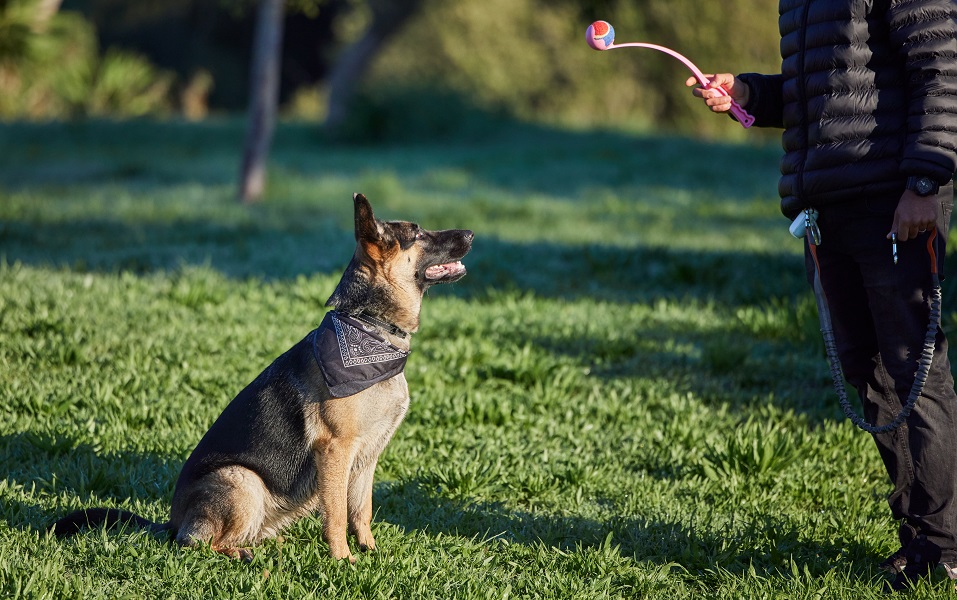
Importance of Pet Training
Training helps pets understand everyday routines, respond to basic cues and develop positive behaviour. Training should be gradual, consistent and based on positive reinforcement. Short and regular sessions are usually easier for pets to understand than long sessions.
Basic Obedience Training
Basic obedience gives dogs a foundation for everyday communication and helps them respond safely to common situations.
Useful Basic Commands
- Sit
- Use a small treat or toy to guide the dog into a sitting position.
- Say “Sit” calmly as the dog sits.
- Reward immediately when the behaviour is completed.
- Stay
- Ask the dog to sit.
- Use the “Stay” cue and take a small step away.
- Return and reward the dog for remaining in position.
- Gradually increase the distance and duration.
- Come
- Use the dog’s name followed by “Come”.
- Use an enthusiastic voice.
- Reward immediately when the dog comes to you.
- Practice first in a safe and secure area.
- Down
- Guide the dog from a sitting position towards the floor using a treat.
- Say “Down” calmly.
- Reward when the dog lies down.
- Leave it
- Teach the dog to ignore an item when asked.
- Reward the dog when it turns its attention back to you.
- Practice first with low-value objects before gradually increasing distractions.
- Wait
- Ask the dog to pause before moving through doors, eating food or starting an activity.
- Reward calm waiting.
- Gradually increase the waiting time.
Positive Reinforcement
- Reward behaviours that you want the pet to repeat.
- Rewards can include treats, praise, play or attention.
- Give the reward soon after the desired behaviour.
- Keep training sessions short and positive.
- Avoid shouting, hitting or harsh punishment.
Socialisation & Positive Behaviour
- Introduce pets gradually to people, sounds, places, handling and other animals.
- Give the pet enough time to become comfortable with new experiences.
- Avoid forcing a frightened pet into situations that cause significant stress.
- Reward calm and desirable behaviour.
- If a normally friendly pet suddenly becomes fearful, aggressive or unusually withdrawn, consider an underlying health or behavioural issue and speak with a veterinarian or qualified behaviour professional.
Potty Training Guide for Dogs & Cats
- Water, Hydration & Healthy Weight
- Fresh, clean water should always be available to your pet. Dogs and cats can drink more water on hot days, after exercise, or when eating dry food, so keep an eye on their normal drinking habits.
- A healthy weight is important for everyday comfort and long-term health. Try to keep meals, treats and portions consistent, and speak with a veterinarian if you are unsure about your pet’s ideal weight or notice a sudden change in appetite or weight.
- Potty training is easiest when you establish a consistent routine, reward desired behavior, and avoid punishment.
Specific for Dogs
1. Establish a schedule
- Take puppies outside after waking, eating, drinking, playing, and sleeping.
- Young puppies may need very frequent bathroom breaks.
- Take adult dogs out at regular intervals.
2. Choose a toilet area
- Consistently use the same outdoor spot.
- Give your dog enough time to sniff and eliminate.
3. Use a cue
- Use a simple phrase such as “Go potty.”
- Say it calmly when the dog begins eliminating.
4. Reward immediately
- Praise and offer a small treat immediately after successful elimination.
5. Watch for warning signs Sniffing, circling, restlessness, whining, or walking toward the door can indicate the need to go.
6. Accidents
- Clean accidents thoroughly with an enzymatic pet-safe cleaner to reduce lingering odor.
- Don’t punish, rub the dog’s nose in it, or yell.
Specific to Cats
Most kittens naturally learn to use a litter box, but the environment matters.
- Choose suitable litter boxes
- Use a box that’s large enough for the cat to comfortably turn around.
- For multiple cats, a useful general guideline is one box per cat plus one extra.
- Place boxes appropriately
- Put them in quiet, easily accessible locations.
- Avoid placing them beside noisy appliances or in areas where the cat can feel trapped.
- Keep them clean
- Remove waste regularly.
- Clean the box routinely and replace litter as needed.
- Introduce kittens
- Gently place a kitten in the litter box after meals, naps, and play.
- Praise calmly when they use it.
- Don’t force or punish
- Never punish a cat for accidents or force its paws into litter.
When accidents may indicate a health problem
If a previously trained pet suddenly starts having accidents, don’t assume it’s behavioral.
Dogs: frequent urination, straining, excessive thirst, diarrhea, or loss of bladder control can require veterinary evaluation.
Cats: repeated trips to the litter box, straining, crying while urinating, blood in urine, or producing little/no urine can be signs of urinary disease. A cat that is unable to urinate needs emergency veterinary.
Common Advisory for Training Dogs
- Establish a schedule
- Take puppies outside after waking, eating, drinking, playing and sleeping.
- Young puppies may need frequent bathroom breaks.
- Take adult dogs outside at regular intervals.
- Choose a toilet area
- Use the same outdoor area consistently.
- Give the dog enough time to sniff and eliminate.
- Use a cue
- Use a simple phrase such as “Go potty”.
- Say it calmly when the dog begins eliminating.
- Reward immediately
- Praise the dog and offer a small treat immediately after successful elimination.
- Watch for warning signs
- Sniffing, circling, restlessness, whining or walking towards the door may indicate that the dog needs to go.
- Accidents
- Clean accidents thoroughly using a pet-safe enzymatic cleaner.
- Do not punish the dog or rub its nose in the accident.
Common Advisory for training Cats
- Use a litter box that is large enough for the cat to comfortably turn around.
- Place litter boxes in quiet and easily accessible locations.
- Remove waste regularly and keep the litter box clean.
- For multiple cats, a useful general guideline is one litter box per cat plus one extra.
- Never punish a cat for accidents.
- If a previously trained cat suddenly stops using the litter box, consider whether an underlying health problem may be involved.
Leash Training
- Introduce the collar or harness gradually.
- Allow the dog to investigate the equipment.
- Introduce the leash indoors before moving outside.
- Reward calm behaviour and walking near you.
- When the dog pulls, stop walking rather than pulling back.
- Continue walking once the leash becomes loose.
- Gradually move from quiet areas to busier locations.
Off-Leash Training
Off-leash training should only be introduced after the dog has developed reliable basic obedience and recall.
Step-by-Step
- Practice indoors or in a secure fenced area.
- Teach reliable recall using “Come”.
- Use a long training line before allowing complete off-leash freedom.
- Gradually introduce distractions such as people, dogs, toys and smells.
- Teach an emergency recall using a special cue and a valuable reward.
- Begin off-leash practice only in a secure and appropriate environment.
When NOT to go off-leash
- Roads and traffic
- Unfenced areas
- Crowded public spaces
- Aggressive or unfamiliar animals
- Wildlife areas
- Construction areas or other hazardous locations
- Always check local rules before allowing a dog off-leash in public areas.
Golden Rule
Reliable recall + gradual practice + secure surroundings = safer off-leash freedom.