
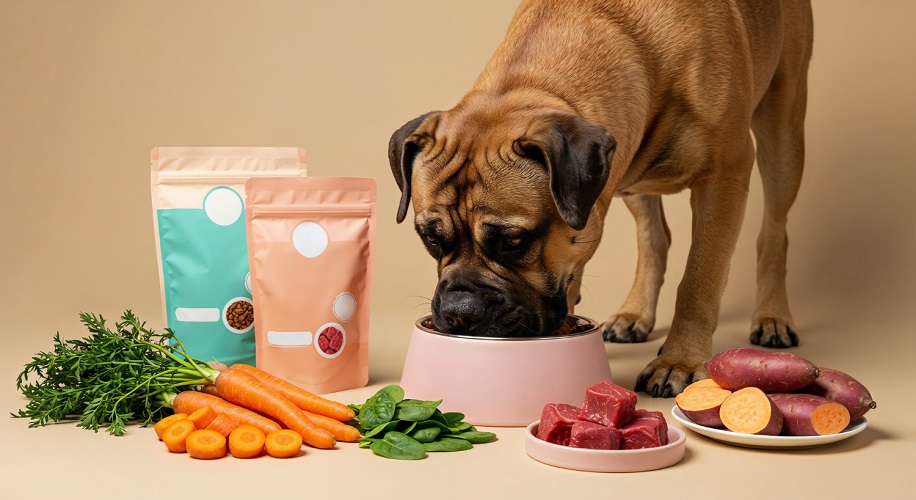
Homemade Vegetarian Foods
A key distinction: dogs can sometimes thrive on a carefully formulated vegetarian diet, but cats are obligate carnivores and should not be feed a homemade vegetarian diet as their regular food without veterinary nutritionist supervision.
Dogs
Occasional vegetarian foods that are generally suitable for many healthy dogs include:
- Cooked rice or oats
- Cooked pumpkin or sweet potato
- Carrots and green beans
- Cooked peas
- Plain cooked lentils or chickpeas in small portions
- Plain cooked egg, if your dog eats eggs
- Small amounts of plain, unsweetened yogurt, if tolerated
Simple meal idea:
- Cooked rice + pumpkin + carrots/green beans + a small portion of lentils or egg.
However, this isn’t automatically a complete and balanced diet. A dog eating homemade food long-term needs carefully calculated protein, essential fatty acids, vitamins and minerals—often requiring a veterinary-formulated recipe and supplements.
Cats
Cats have nutritional requirements that make a vegetarian homemade diet unsafe to improvise. They require nutrients such as taurine, arachidonic acid and preformed vitamin A, among others, that are naturally supplied by animal tissues.
- Vegetables such as pumpkin or carrots can sometimes be used in small amounts as an addition, but they should not replace the animal-based nutrition in a cat’s diet.
What to avoid for both dogs and cats
- Onion, garlic, leeks and chives
- Grapes and raisins
- Chocolate and caffeine
- Alcohol
- Xylitol/birch sugar
- Heavily salted or spicy foods
- Cooked bones
- Raw yeast dough
- Highly fatty or fried foods
Homemade Non-Vegetarian Food for Dogs & Cats
Homemade meat-based food can be used as part of a pet’s diet, but meat alone is not a complete diet. Dogs and especially cats need specific vitamins, minerals, amino acids, fatty acids, and other nutrients.
Dogs
- Suitable ingredients for many healthy dogs include:
- Boiled or cooked chicken — boneless and unseasoned
- Turkey — cooked and plain
- Lean beef — thoroughly cooked
- Fish — fully cooked and carefully deboned
- Eggs — cooked and plain
- Plain rice or oats
- Pumpkin, carrots, or green beans in suitable amounts
Simple meal idea:
- Cooked chicken + rice + pumpkin/vegetables, combined according to a nutritionally balanced recipe.
For long-term homemade feeding, have the recipe formulated by a veterinary nutrition professional rather than relying on meat + rice alone.
Cats
Cats have stricter nutritional requirements because they are obligate carnivores.
Suitable animal-based foods can include:
- Cooked chicken or turkey
- Cooked lean beef
- Cooked fish occasionally
- Cooked egg in small amounts
A nutritionally complete commercial cat food alongside appropriate homemade food. Cats require nutrients such as taurine, arachidonic acid, and preformed vitamin A, so a homemade meat recipe needs careful formulation and appropriate supplementation.
What to avoid for both Cats and Dogs:
- Raw or cooked bones
- Onion, garlic, leeks and chives
- Chocolate and caffeine
- Grapes and raisins
- Xylitol
- Alcohol
- Highly salted, spicy or oily foods
- Processed meats such as sausages and heavily seasoned meat
- Raw meat or eggs when food-safety risks are a concern